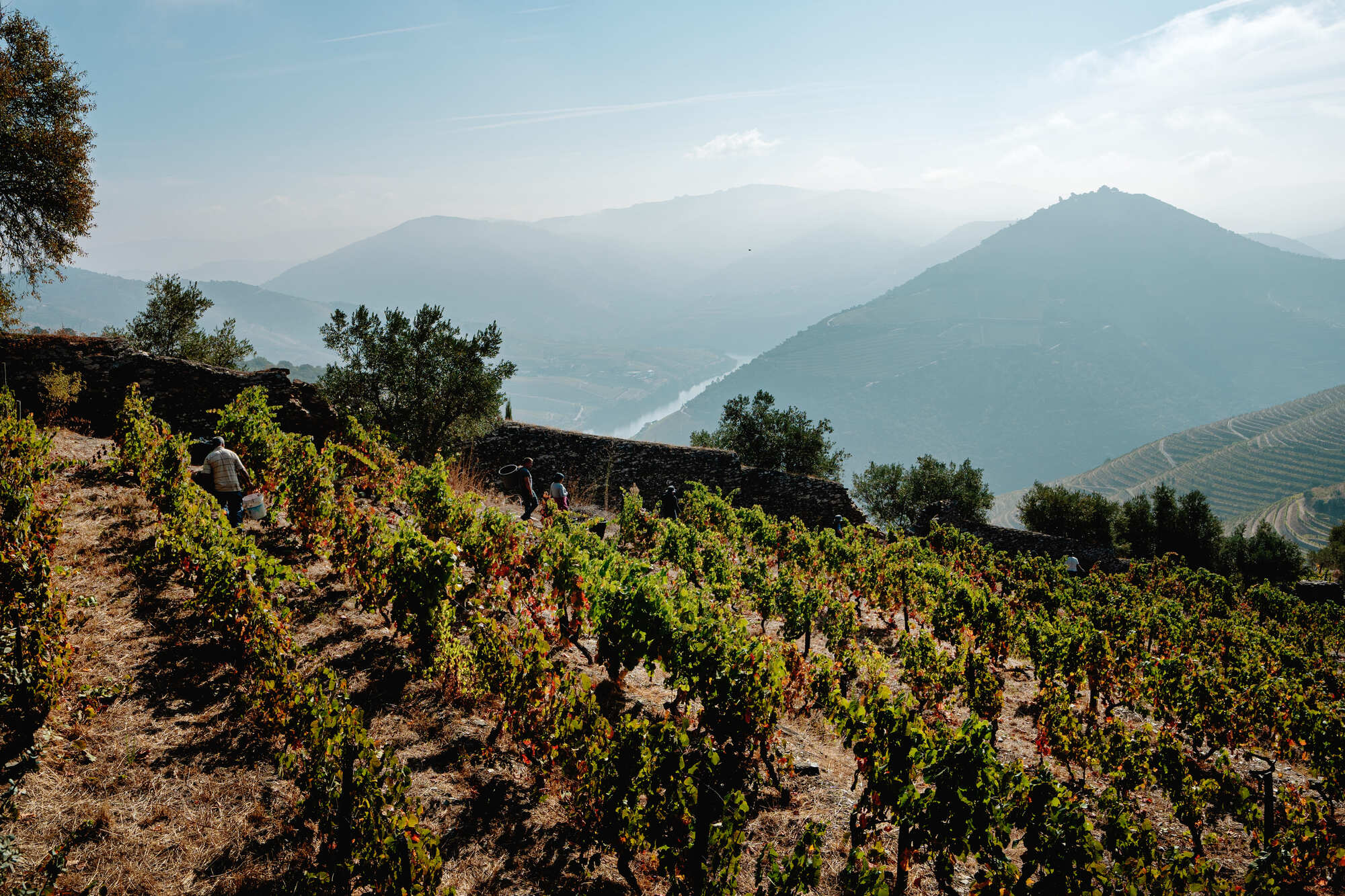
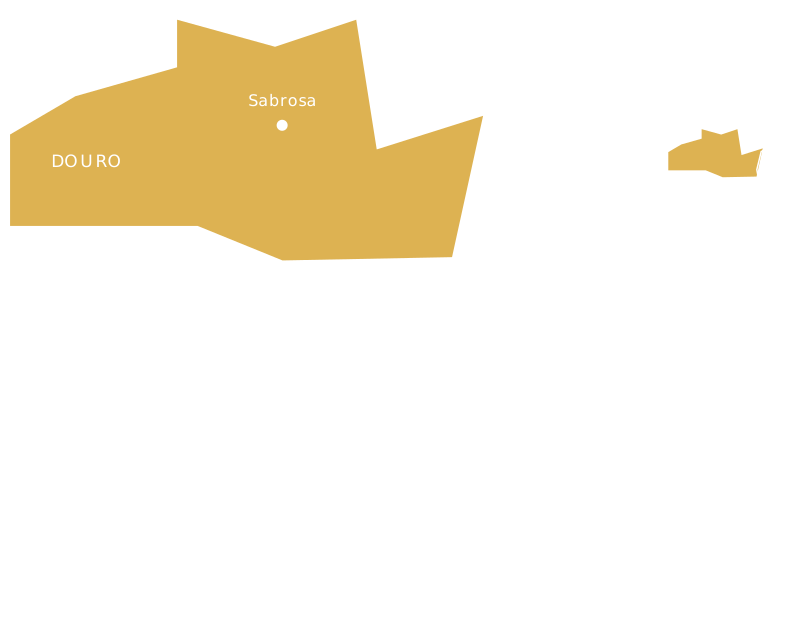
The Douro Demarcated Region is the oldest and most regulated in the world. Its long wine-growing tradition, as well as the mountains that surround it, give it a landscape of unparalleled beauty, having been classified as a World Heritage Site by UNESCO in 2001. This Wonderful Kingdom, as it is called by Miguel Torga, is undoubtedly a unique, heterogeneous region with clear contrasts between natural and human-made landscapes. It is a reflection of the audacity and ingenuity of humankind, resulting in clear technological, social, and economic evolution.

CLIMATE
Generally speaking, the climate is quite dry because the steeply sloping valleys create natural barriers to humid air masses coming from the Atlantic Ocean, protecting the vines from the cold north winds. During the hot and dry summer months, the high temperatures contrast with harsh and prolonged winters, with fluctuating temperatures and plenty of frost and some snow. Thus, this combination of climates results in the essential conditions for the production of wines of singular character, extreme richness and longevity.

SOIL
The presence of schist is one of the most distinctive characteristics of the geological composition of the Douro soils, allowing them a high absorption of radiant energy with a positive impact on the vegetative cycle of the vine. One of the main challenges in this region was the transformation of inhospitable soils into distinct planting surfaces: terraces, platforms, and hilltops.
The presence of schist is one of the most distinctive characteristics of the geological composition of Douro soils, allowing them a high absorption of radiant energy with a positive impact on the vegetative cycle of the vine. These soils are poor in organic matter and phosphorus, but rich in nutrients and favorable to water permeability, essential qualities for the vine to develop in the arid conditions that prevail during the summer months.